
How to Choose a Sump Pump for Reliable Basement Protection
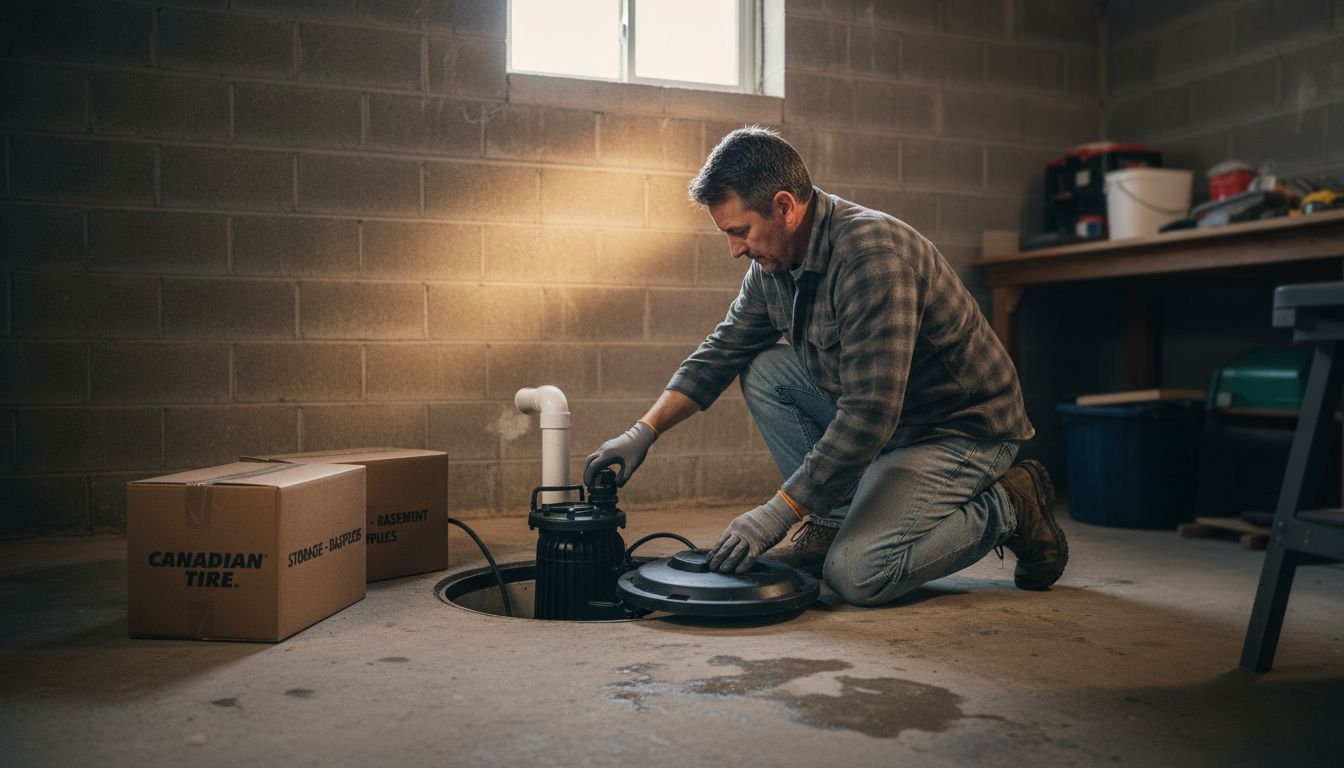
Facing another heavy rainfall in the Greater Toronto Area can be stressful when your basement sits at risk of water damage. With unpredictable weather and aging infrastructure across Toronto, homeowners need reliable solutions that match their unique property challenges. This guide will help you understand how to assess vulnerabilities, compare sump pump features, and choose the best protection for your home’s foundation. Start taking control with clear steps and expert-backed strategies for safeguarding one of your biggest investments.
Table of Contents
- Step 1: Assess Your Basement’s Flooding Risks
- Step 2: Determine The Right Sump Pump Size And Type
- Step 3: Compare Essential Sump Pump Features
- Step 4: Check For Local Installation Requirements
- Step 5: Verify Your Sump Pump Choice And Prepare For Installation
Quick Summary
| Key Point | Explanation |
|---|---|
| 1. Assess basement flooding risks | Evaluate your basement’s condition and risk factors to inform protection strategies. |
| 2. Select appropriate sump pump | Choose a sump pump based on size, type, and specific water management needs. |
| 3. Compare sump pump features | Analyze motor power, materials, and backup systems for durability and performance. |
| 4. Check local installation requirements | Adhere to local codes to ensure proper installation and avoid legal issues. |
| 5. Prepare for successful installation | Verify measurements and compatibility to ensure a smooth sump pump setup. |
Step 1: Assess your basement’s flooding risks
Assessing your basement’s flooding risks is a critical first step in protecting your home from potential water damage. By understanding the unique characteristics of your basement and its vulnerabilities, you can make informed decisions about sump pump selection and prevention strategies.
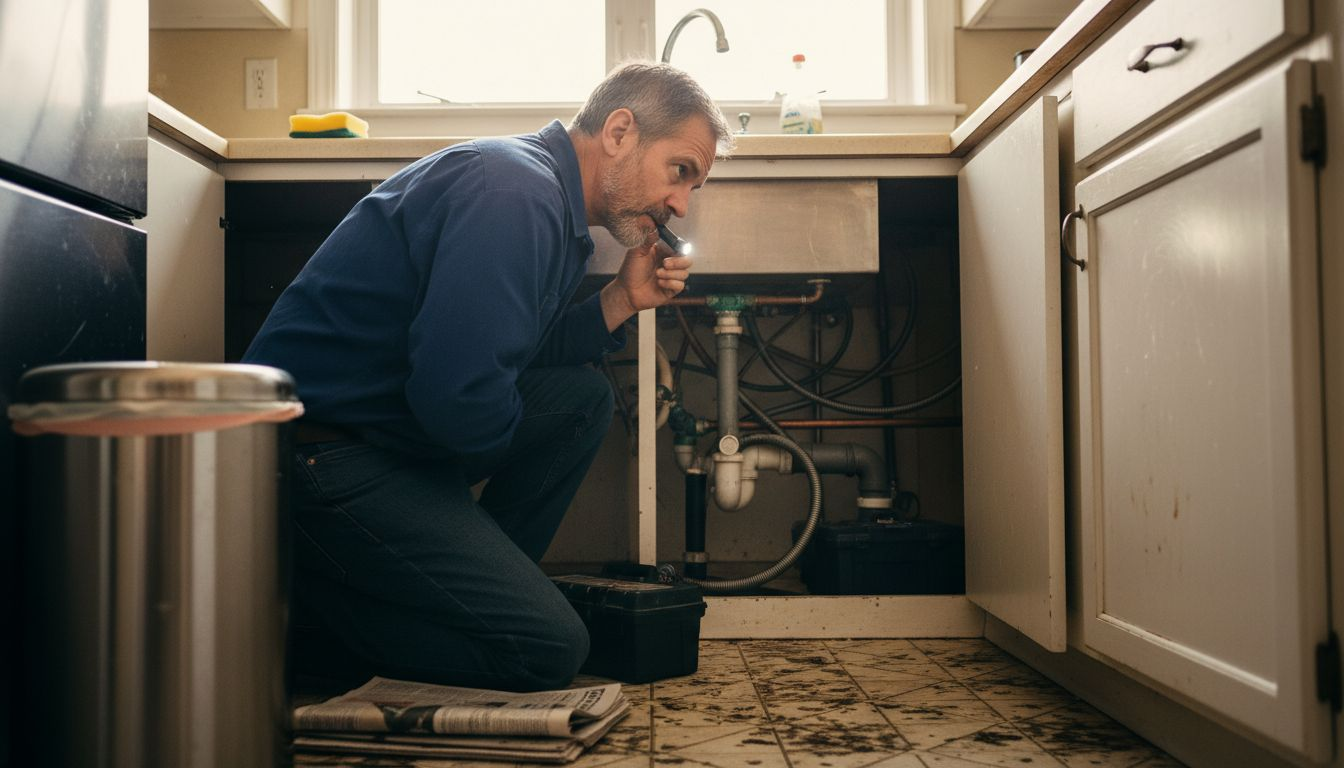
Start by thoroughly examining your basement’s current condition and potential risk factors. Water damage can occur through multiple pathways , so a comprehensive assessment is essential. Consider these key areas:
- Foundation condition and age
- Proximity to water sources (rivers, streams, groundwater)
- Local topography and drainage patterns
- Historical flood records for your neighbourhood
- Condition of existing drainage systems
The Canadian research on understanding basement flooding causes reveals that most residential water intrusion stems from predictable environmental factors. Pay close attention to signs of previous moisture intrusion, such as water stains, efflorescence on walls, musty odours, or visible mould.
Basements in the Greater Toronto Area are particularly susceptible to flooding due to intense rainfall and aging municipal infrastructure.
To conduct a thorough risk assessment, consider scheduling a professional basement inspection. These experts can identify subtle vulnerabilities that might escape an untrained eye and provide specific recommendations tailored to your home’s unique characteristics.
Here is a summary of common Canadian basement flooding risks and their likely impacts:
| Risk Factor | Typical Impact | Recommended Action |
|---|---|---|
| Aging foundation | Increased leaks | Structural inspection |
| High local water table | Greater seepage risk | Install sump pump |
| Poor surface drainage | Water pooling outside | Improve landscaping |
| Outdated municipal systems | Backups and overflow | Maintenance upgrades |
| Previous flood history | Ongoing moisture | Enhanced waterproofing |
Pro tip: Document your basement’s current condition with photographs and detailed notes, which can be invaluable for insurance purposes and future prevention strategies.
Step 2: Determine the right sump pump size and type
Selecting the correct sump pump size and type is crucial for effective basement water management. Your goal is to find a pump that can handle your specific water volume and basement characteristics with maximum efficiency and reliability.

To determine the right sump pump, you’ll need to evaluate several key factors. Pump capacity is your primary consideration , which depends on water volume and potential flooding scenarios. The detailed Canadian guide on sump pump selection highlights the importance of matching pump specifications to your unique basement environment.
Consider these critical measurement factors:
- Basin dimensions
- Average water inflow during rainfall
- Total vertical lift required
- Pipe friction and horizontal distance
- Water table depth in your area
Most residential basements in the Greater Toronto Area require a 1/3 to 1/2 horsepower pump capable of moving 25-35 gallons per minute.
You’ll typically choose between two primary pump types:
- Submersible pumps : Sit inside the sump pit, quieter, and more powerful
- Pedestal pumps : Mounted above the pit, less expensive, easier to maintain
The pump’s horsepower directly correlates with its water-moving capacity. A 1/3 horsepower pump works for most residential basements, while homes with higher water volumes might require 1/2 or 3/4 horsepower models.
Compare sump pump types and their suitability for Canadian basements:
| Pump Type | Strengths | Limitations | Best for |
|---|---|---|---|
| Submersible | Quiet, high volume, reliable | Higher cost, harder access | Deep pits |
| Pedestal | Low cost, easy to service | Noisier, less powerful | Shallow pits |
| Backup Systems | Operates during outages | Requires battery/water line | Emergency use |
Pro tip: Always add 25% extra capacity to your calculated pump requirements to account for unexpected water volume and prevent potential system overload.
Step 3: Compare essential sump pump features
Understanding the critical features of sump pumps is vital to ensuring reliable basement protection. Your goal is to identify a pump that not only meets your specific water management needs but also offers long-term durability and performance.
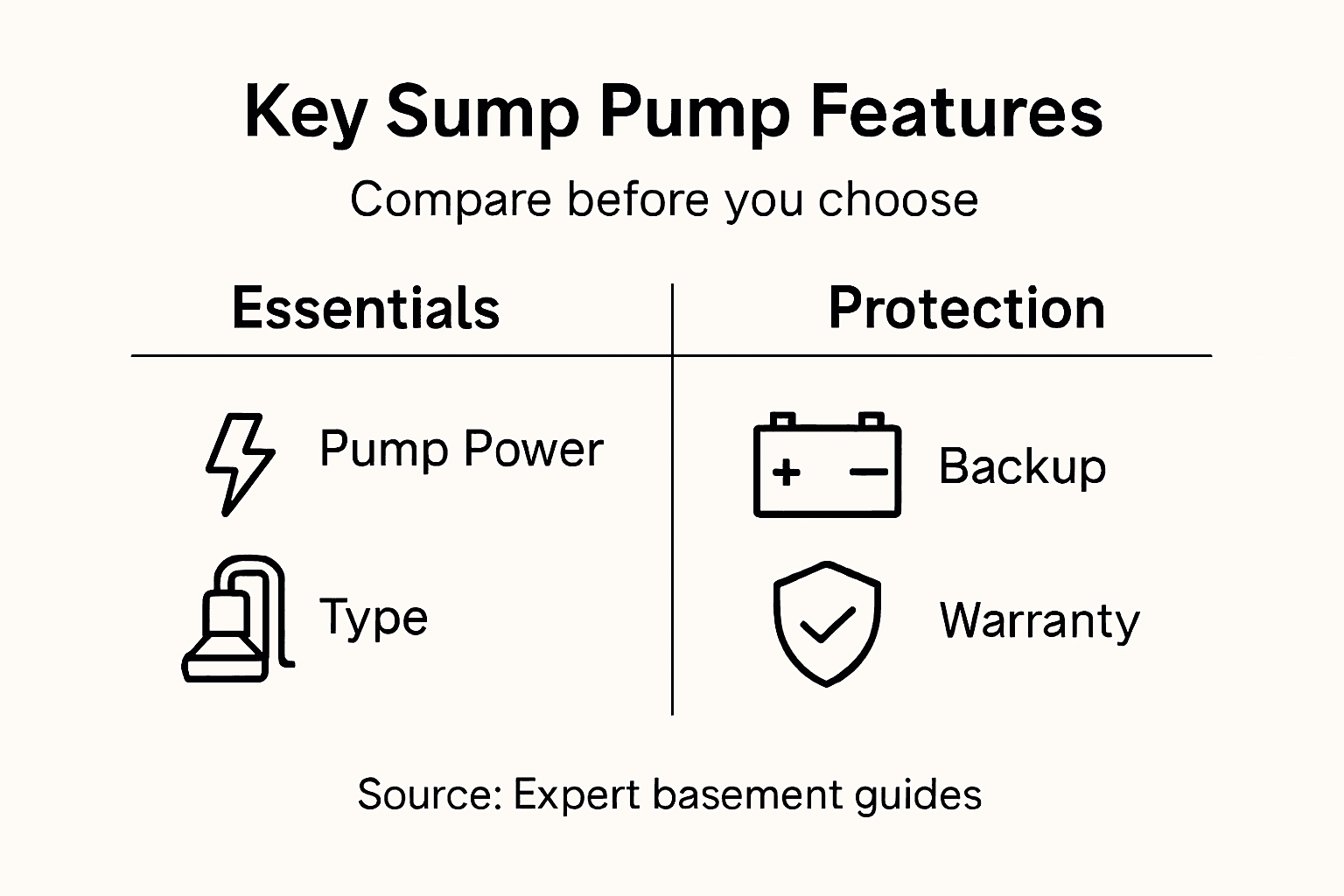
Construction materials play a significant role in a pump’s reliability and longevity. The comprehensive Canadian guide on sump pump selection recommends evaluating key features that impact overall performance and resilience.
Key features to compare include:
- Motor power and horsepower ratings
- Float switch mechanism types
- Construction material durability
- Noise level and operational efficiency
- Backup power system capabilities
In the Greater Toronto Area, a high-quality sump pump should withstand frequent use and varying water volume conditions.
Consider these essential feature comparisons:
-
Construction Materials :
- Cast iron: Most durable, best heat dissipation
- Stainless steel: Corrosion-resistant, longer lifespan
- Plastic: Lightweight, most affordable
-
Float Switch Mechanisms :
- Tethered switches: Cost-effective, wider activation range
- Vertical switches: More precise water level control
- Electronic switches: Most accurate, minimal mechanical wear
Backup power systems are particularly crucial for Canadian homeowners facing unpredictable weather and potential power interruptions. Look for pumps with battery backup or water-powered backup systems to ensure continuous protection during emergencies.
Pro tip: Invest in a sump pump with a robust warranty and check if the manufacturer offers comprehensive customer support for installation and maintenance.
Step 4: Check for local installation requirements
Navigating local installation requirements is a critical step in ensuring your sump pump meets all municipal and provincial regulations. Understanding these guidelines protects you from potential legal and safety complications that could arise from improper installation.
The comprehensive Canadian plumbing regulations provide a framework for sump pump installations across different municipalities. Each region may have specific nuances in their building codes and permit requirements.
Key local installation requirements typically include:
- Sump pit dimensions and specifications
- Electrical circuit requirements
- Discharge pipe placement and slope
- Backflow prevention mechanisms
- Ventilation and soil gas prevention
Municipal codes in the Greater Toronto Area often require sealed sump pit covers and dedicated electrical circuits for sump pump installations.
Essential steps to verify local requirements:
-
Contact local building department
- Request current plumbing installation guidelines
- Confirm permit requirements
- Ask about specific regional regulations
-
Review electrical safety standards
- Verify minimum circuit amperage
- Confirm grounding requirements
- Check backup power system regulations
Electrical compliance is particularly crucial for ensuring your sump pump operates safely and meets local building codes. Some municipalities require professional certification for installation to guarantee proper setup.
Pro tip: Schedule a pre-installation consultation with a licensed plumber familiar with your local municipal codes to ensure full compliance and avoid potential fines or required reinstallations.
Step 5: Verify your sump pump choice and prepare for installation
Preparing for your sump pump installation requires careful verification and strategic planning. Your final selection must align perfectly with your basement’s specific water management needs to ensure long-term reliability and protection.
The comprehensive Canadian plumbing installation guide recommends a systematic approach to final verification and preparation. This ensures your chosen pump matches your technical requirements and local regulations.
Key verification steps include:
- Confirm total vertical lift requirements
- Verify sump pit dimensions
- Check electrical circuit compatibility
- Measure water volume and flow rate
- Validate local building code compliance
Professional installers recommend measuring your basement’s water volume three times to ensure absolute accuracy in pump selection.
Pre-installation preparation checklist:
-
Measure and document
- Precise sump pit dimensions
- Current water table depth
- Vertical lift distance
- Horizontal pipe discharge length
-
Technical compatibility review
- Confirm pump horsepower matches water volume
- Verify float switch mechanism
- Check electrical requirements
- Inspect discharge pipe specifications
Electrical and structural preparation is crucial for seamless installation. Ensure your workspace is clear, tools are accessible, and you have all necessary permits and documentation.
Pro tip: Take detailed photographs of your existing sump pit and basement layout before beginning installation to help professionals troubleshoot any potential complications.
Protect Your Basement with Expert Sump Pump Solutions from DrainWorks Plumbing
Flooding risks and sump pump selection can feel overwhelming when safeguarding your basement. This article highlights how vital it is to assess your basement’s vulnerabilities and choose the right pump type and features. At DrainWorks Plumbing, we understand these challenges and offer trusted residential plumbing services to help you select, install, and maintain sump pumps tailored specifically for Toronto homes. Our expertise ensures your system meets local codes and delivers reliable, long-term protection against water damage.
Don’t wait for the next heavy rain to threaten your basement’s safety. Visit us at DrainWorks Plumbing to explore our waterproofing and sump pump services. With over 30 years of experience, clear up-front pricing, and award-winning technicians, we are your reliable partner for preventing basement flooding. Contact us today for a professional consultation and secure your home against costly water damage with the confidence you deserve.
Frequently Asked Questions
What factors should I consider when choosing a sump pump for my basement?
Choosing a sump pump involves considering factors such as the pump’s capacity, the size of your sump pit, and the potential water volume during heavy rain. Assess your basement’s water inflow and vertical lift requirements to select a pump that can efficiently manage your specific conditions.
How can I determine the right size for my sump pump?
To determine the right size for your sump pump, measure the dimensions of your sump pit and assess the average water inflow expected during rainfall. Generally, a pump with a capacity of 25-35 gallons per minute is suitable for most residential basements, but always calculate based on your unique situation.
What are the benefits of different types of sump pumps?
Submersible pumps are generally quieter and more powerful, making them ideal for deep pits, while pedestal pumps are easier to maintain and more affordable but can be noisier. Evaluate the strengths and limitations of each type to find one that aligns with your basement conditions and budget.
How do I ensure my sump pump installation meets local regulations?
To ensure compliance with local regulations, consult your local building department for the specific plumbing installation guidelines relevant to sump pumps. Verify requirements such as sump pit dimensions, electrical specifications, and discharge placements before proceeding with installation.
What maintenance is required for sump pumps?
Sump pumps require regular maintenance to ensure they function effectively, including checking the pump’s float switch and cleaning the sump pit to prevent clogs. Perform maintenance checks at least once a year, and before heavy rainfall seasons, to maintain optimal performance.
How can I prepare for sump pump installation?
Prepare for sump pump installation by measuring the sump pit dimensions, reviewing electrical requirements, and ensuring your workspace is clear. Document the current condition with photos and notes to assist professionals during installation.
Recommended